Brand & Digital Design
Design that looks like you and works for your real customers
We create brand identities, visual systems and interfaces that feel true to your business and stay easy to use for the people who actually show up.
Sound familiar?
- Our website looks like every other template in our industry.
- Our logo, menu, sign and website all look like different businesses.
- Our regulars squint at the screen and call us to ask our hours.
- People find us on their phones, and the site is a mess on a small screen.
What’s included
- Brand identity: logo direction, color, type and illustration style
- A visual system that carries your brand across web, print and social
- UI/UX design for websites, apps and admin screens
- Mobile-first layouts for customers on the go
- Readability and contrast checks for older and low-vision audiences
- Design that ships as a working site or app, not just a mockup
- font sizes raised in Poodie’s Roadhouse’s readability pass
- 269font sizes raised in Poodie’s Roadhouse’s readability pass
- smallest text size on the Poodie’s Roadhouse site
- 9px → 11pxsmallest text size on the Poodie’s Roadhouse site
- gallery room looks the artist chooses from at Ruff Studios
- 3gallery room looks the artist chooses from at Ruff Studios
Why design matters for a small business
People decide whether to trust a business in seconds. A dated or generic look tells them you might not be open, might not be good or might not be for them. A clear, distinctive design tells them the opposite before they read a word.
Good design is not just about looking nice. It is about your real customers. A diner’s regulars may be in their seventies. A contractor’s next client may be checking you out on a phone in a parking lot. A gallery visitor wants the art, not the interface. We design for those people, in Kansas City, Austin and everywhere in between.
Designing for the phone in the parking lot
Most of your customers will meet you on a phone, often in a hurry. They are standing in a parking lot, sitting in a truck or deciding where to eat tonight. They want your hours, your address, your phone number or a way to book, and they want it without pinching and zooming.
So we design mobile-first. The essentials sit at the top, buttons are big enough for a thumb, and text is sized for real eyes in real light. Then we make sure the same design holds up on a desktop for the people who research at their kitchen table.
Consistency matters too. When your website, menu, signs and social posts share one look, customers recognize you instantly, and every place they see you builds the same trust.
How we work
1. Learn your character
We start with what makes your business yours: the story, the place, the customers and the feeling you want people to leave with. That becomes the brief for everything that follows.
2. Build the identity
We develop the brand itself, from color and type to an illustration or visual theme, and pull it together into a simple system you can use on your site, menus, signs and social posts.
3. Design for the real visitor
We lay out pages and screens mobile-first, keep the most-wanted information one tap away and check text size and contrast for the people who will actually use them.
4. Ship it and refine it
Because we also build, the design ships as a working website or app. After launch we keep refining as we learn how customers use it.
What it looks like in practice
- Michelle’s Ranch Cafe, a beloved diner in Grandview, got a bold branded identity with a custom western illustration style. The mobile-first site puts the menu, hours, daily specials and one-tap directions right where hungry locals look.
- Gambit Media, a new Kansas City marketing and media studio, launched with a chess-themed brand built around its strategy-first line: “Strategy is the first move.” The editorial multi-page site pairs that brand with a services accordion, a principals section and a launch journal.
- Ruff Studios, the gallery of Lee’s Summit painter Wayne Ruff, opens each collection as a walkable 3D room. Wayne picks a look for every gallery: white-cube, warm-hall or dark-salon. Colors match the photos of his paintings exactly.
- Poodie’s Hilltop Roadhouse, a Texas honky-tonk west of Austin, has an older crowd. We ran a readability pass that raised 269 font sizes, lifting the smallest text from 9px to 11px, and turned the image-only menu into real, searchable text.
Why partner with Ember Digital
Many studios hand you a beautiful mockup and leave the hard part to someone else. We design and build, so what you approve is what your customers get. We explain our choices plainly, and we stay on after launch to keep improving.
Your brand files, your domain and your content belong to you. We make them look great and work hard.
Design in our work
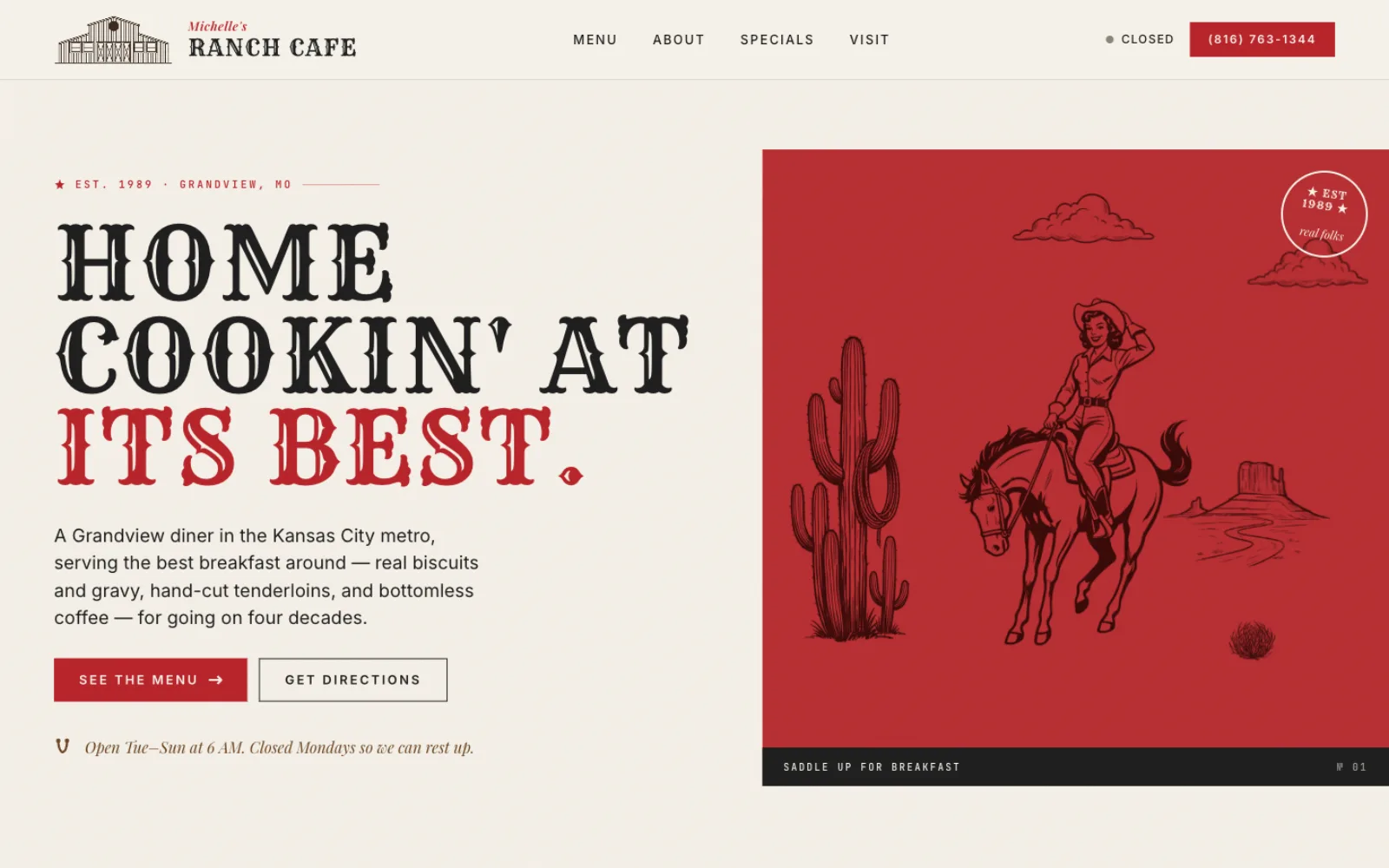
Michelle's Ranch Cafe
Grandview, MO
We designed and built a fast, mobile-first site for a beloved Grandview diner, with a western look as warm as the food.
Read the case study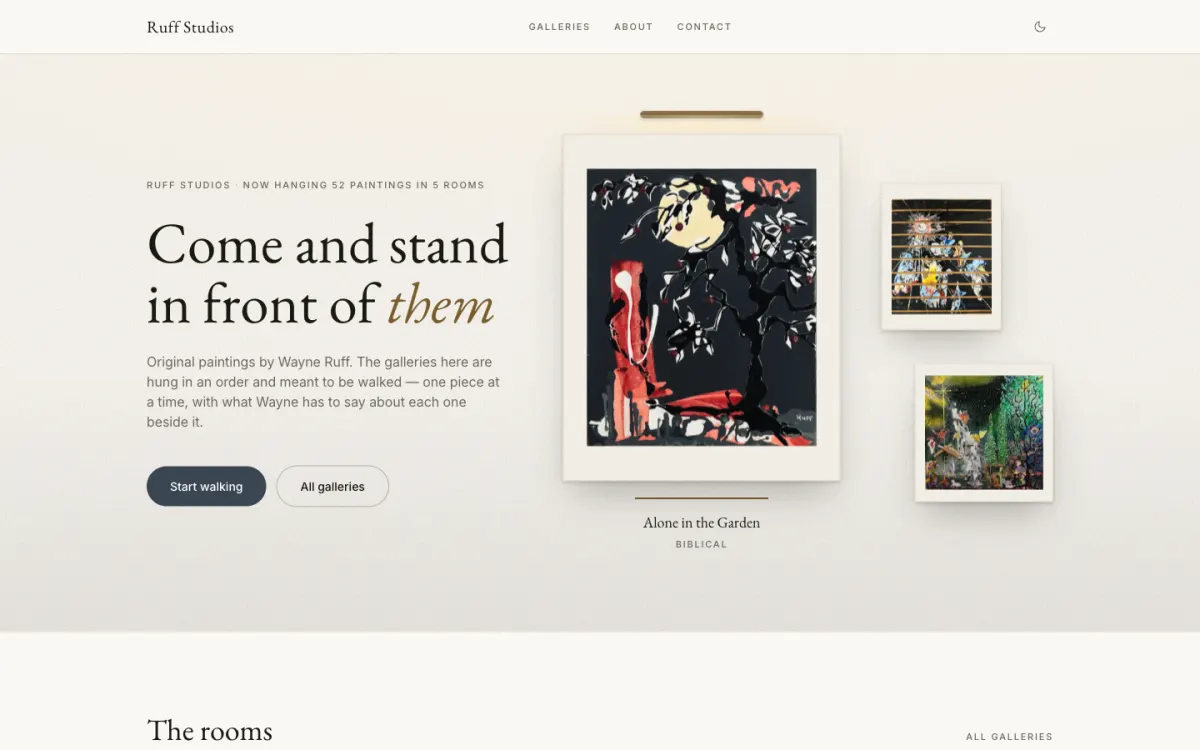
Ruff Studios
Lee's Summit, MO
Painter Wayne Ruff hangs his work in a deliberate order. We built him walkable 3D gallery rooms, plus an artist-friendly admin that lets him load forty paintings in an evening.
Read the case study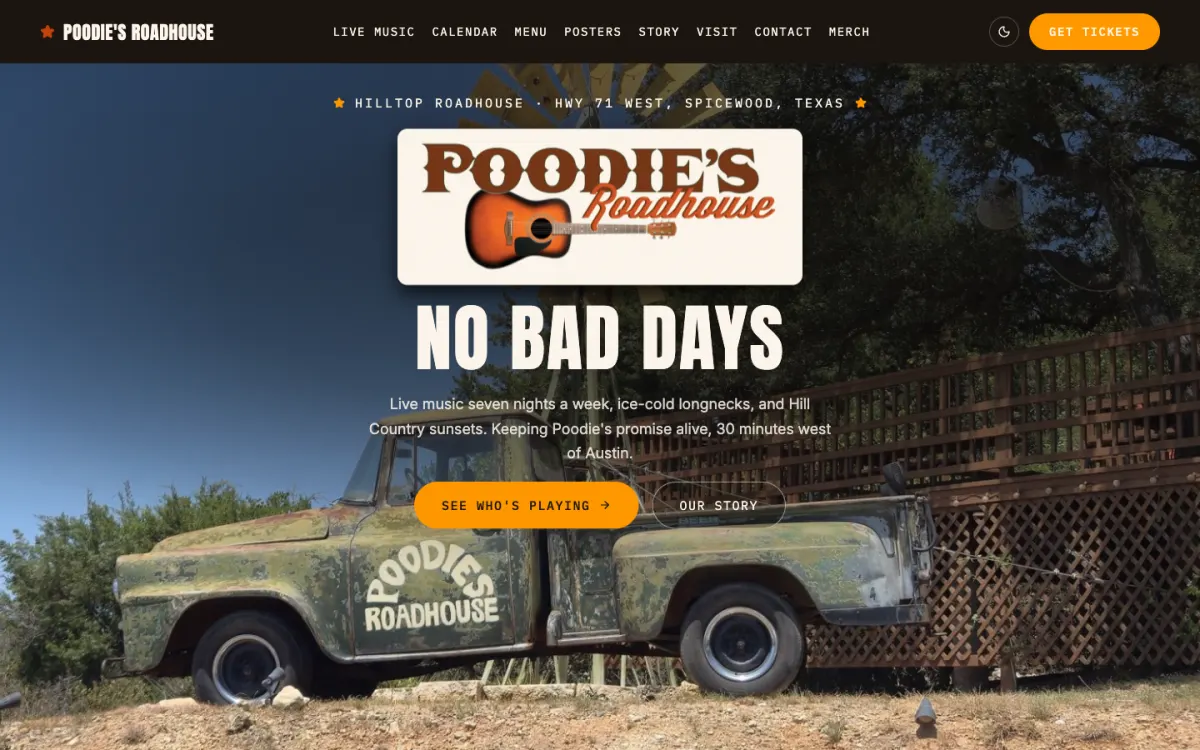
Poodie's Hilltop Roadhouse
Spicewood, TX (Austin area)
Poodie's Hilltop Roadhouse books live music seven nights a week. We replaced a hand-edited Dreamweaver site with one whose calendar updates itself from the venue's Google Calendar every night.
Read the case studyFrequently asked questions
What does brand identity design include for a small business?
Brand identity design for a small business includes the look people recognize you by: logo direction, colors, typefaces and often an illustration or visual style. It also includes simple guidance for using that look consistently on your website, menus, signs and social posts. The result is one recognizable business everywhere customers meet you.
What is the difference between UI and UX design?
UI design is how a website or app looks, and UX design is how easy and pleasant it is to use. UI covers layout, color, type and buttons. UX covers whether visitors can find what they need, like your hours or a booking button, without getting stuck.
How do you design a website for older customers?
Design a website for older customers by using larger text, strong contrast, clear labels and simple navigation. Put the essentials, like hours, location and phone number, where they are easy to find and tap. For Poodie’s Hilltop Roadhouse we raised 269 font sizes so the smallest text went from 9px to 11px.
Do you also build the website after designing it?
Yes, we design and build, so the finished website or app matches the design you approved. That avoids the gap between a designer’s mockup and a developer’s interpretation. We also stay on after launch for updates and refinements.