SEO, GEO & AEO
Get found in Google, cited by AI, and chosen as the answer
Search has split into three places: Google’s results, AI-generated answers and direct answer boxes. We build your site so it shows up honestly in all three.
Sound familiar?
- We don’t show up when people search for what we do in our own town.
- We asked ChatGPT for a business like ours and it recommended a competitor.
- Our service pages are a few thin paragraphs that all say the same thing.
- We moved websites and our old Google links started going nowhere.
- We don’t know what schema is, but people keep telling us we need it.
What’s included
- Structured data (schema markup) for your business, services, events and FAQs
- Local city and service pages written for real customers, not keyword stuffing
- An llms.txt file and crawler rules that let AI tools read your site
- Fast, lightweight pages that load quickly on phones
- Clean one-hop redirects for every old URL during a migration
- Question-and-answer content written to be quoted as the answer
- Alignment between your website and your Google Business Profile
- Review markup only when verified reviews actually exist
- fewer 404 errors after MCA WoodWorks’ migration
- 96–98%fewer 404 errors after MCA WoodWorks’ migration
- words per MCA WoodWorks service page, up from 166–262
- 880–1,130words per MCA WoodWorks service page, up from 166–262
- worst-case duplicate wording across MCA WoodWorks city pages
- 12.5%worst-case duplicate wording across MCA WoodWorks city pages
Why SEO, GEO and AEO matter for a small business now
Customers used to find a local business one way: they typed a search into Google and clicked a blue link. Today they also ask ChatGPT, read Google’s AI Overview, or ask a voice assistant and hear one answer. If your business isn’t part of those answers, you’re invisible to a growing share of people who are ready to hire someone.
What is SEO?
SEO (search engine optimization) is the work of helping your website rank in Google’s search results. It covers fast pages, clear titles, useful content, local signals and a site Google can crawl without hitting dead ends.
What is GEO?
GEO (generative engine optimization) is the work of getting your business cited and recommended in AI-generated answers from ChatGPT, Gemini, Perplexity and Google’s AI Overviews. These tools summarize what they can read and trust, so your site needs to be readable by them and specific enough to quote.
What is AEO?
AEO (answer engine optimization) is the work of structuring content so it’s chosen as the direct answer in featured snippets, voice assistants and answer boxes. That means clear questions, direct first sentences and markup that tells machines what each answer is.
How the three overlap
They share a foundation. A fast, well-structured site with honest, specific content helps all three. Structured data helps Google show rich results, helps AI tools understand who you are, and helps answer engines pick your answer. A small business doesn’t need three separate vendors. It needs one site built well for all three.
Why you need all three now
A homeowner in Overland Park looking for a basement remodel might search Google, then ask ChatGPT to compare a few contractors, then ask their phone for a phone number. A nonprofit board member might read an AI Overview and never click a link at all. Each of those moments is a chance to be named or to be skipped.
Large companies have whole teams chasing this. Small businesses have an advantage they rarely use: real, specific knowledge of their own work and their own town. Written down clearly and structured well, that local expertise is exactly what search engines and AI tools are looking for.
How we work
1. Fix the foundation
We start with speed, crawlability and broken links. During a migration we redirect every old URL in exactly one hop, so the trust your old pages earned carries over.
2. Tell machines who you are
We add structured data for your business type, services, events and FAQs, align it with your Google Business Profile, and publish an llms.txt file for AI tools. We make sure AI crawlers are allowed to read the site. We never add star-rating markup unless verified reviews exist.
3. Write pages worth ranking
We build local city and service pages with real substance, plus question-and-answer content that answers what your customers actually ask. Each city page earns its place with details specific to that area, rather than the same paragraph with a new town name swapped in.
4. Watch, adjust, repeat
Search changes. We stay on after launch, review what’s working and explain it in plain terms. We don’t promise rankings, because no honest provider can.
What it looks like in practice
Local pages with real depth. For MCA WoodWorks, a Lee’s Summit remodeling contractor, we built 11 city pages and 7 service pages. Service pages grew from 166–262 words to 880–1,130. Duplicate wording across city pages dropped from 33–40% to a worst case of 12.5%. Every old WordPress URL redirects in one hop, and 404 errors fell 96–98%.
Two brands, one address, no competition. Adventure Motors and Adventure Motors Racing share a street address in Grandview. We declared Racing a division of Motors and kept their services from overlapping, so they don’t compete in local search. We deliberately left out star ratings until there are verified reviews. Both sites keep their sitemap and llms.txt up to date automatically.
Events and menus search engines can read. At Poodie’s Hilltop Roadhouse near Austin, each show is marked up as an event with ticket offers, and the menu is real text instead of images.
Open to AI. For Bellicose Church in Kansas City, AI crawlers are explicitly allowed, and structured data covers the church, upcoming events and teaching audio.
Why partner with Ember Digital
- We tell you the truth about timelines and never guarantee rankings.
- We mark up only what’s true, so your site never carries fake reviews or inflated claims.
- You own your domain, your Google accounts and your content.
- We serve Kansas City, Austin and small businesses nationwide, and we stay after launch.
SEO, GEO & AEO in our work

MCA WoodWorks
Lee's Summit, MO
Every inquiry on MCA WoodWorks’ new site becomes a JobTread job automatically, and finished jobs turn into draft blog posts on their own.
Read the case study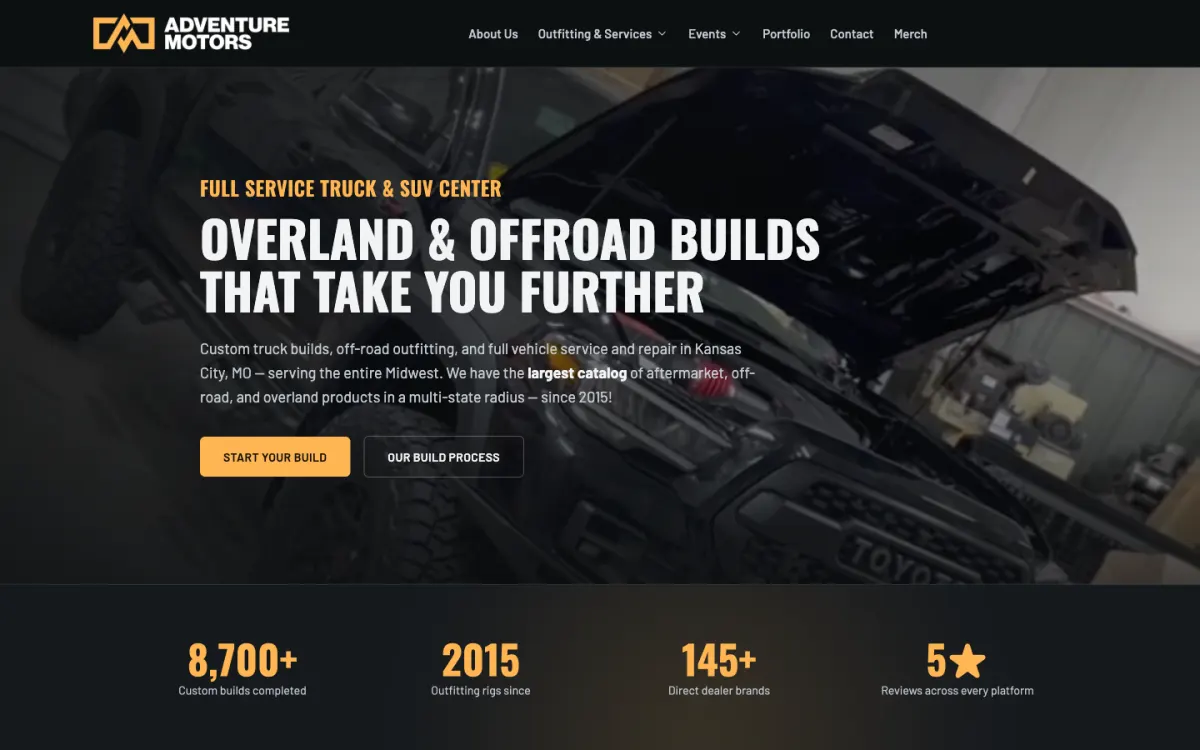
Adventure Motors & Adventure Motors Racing
Grandview, MO
One shop, two disciplines. We replaced a slow WordPress site and Calendly with two fast websites that work like a front desk, sending every lead and booking straight into Shopmonkey.
Read the case study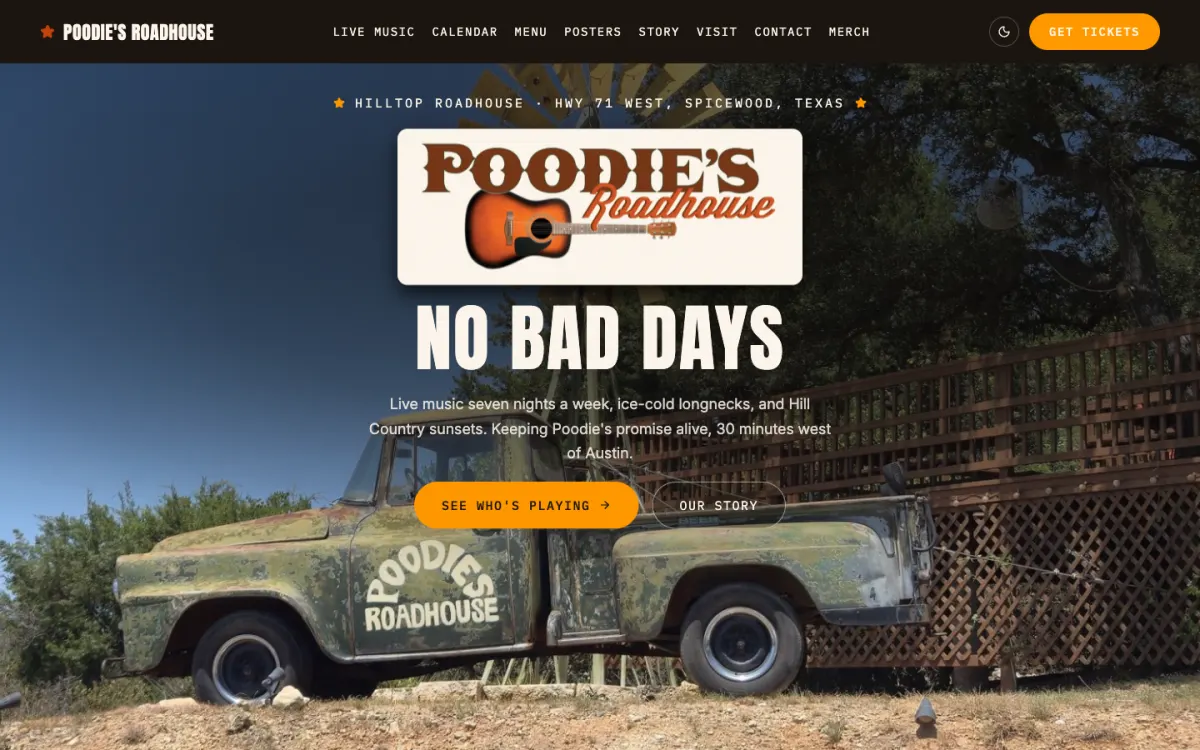
Poodie's Hilltop Roadhouse
Spicewood, TX (Austin area)
Poodie's Hilltop Roadhouse books live music seven nights a week. We replaced a hand-edited Dreamweaver site with one whose calendar updates itself from the venue's Google Calendar every night.
Read the case studyFrequently asked questions
What is the difference between SEO, GEO and AEO?
SEO helps you rank in Google’s search results, GEO helps you get cited in AI-generated answers, and AEO helps your content get chosen as the direct answer. GEO covers tools like ChatGPT, Gemini, Perplexity and Google’s AI Overviews. AEO covers featured snippets, voice assistants and answer boxes. All three share the same foundation: a fast, well-structured site with clear, honest content.
How do I get my business recommended by ChatGPT?
Make your website easy for AI tools to read and specific enough to quote. That means allowing AI crawlers, publishing an llms.txt file, adding structured data, and writing clear answers to the questions customers ask. Keeping your Google Business Profile consistent with your site helps too. No one can guarantee a recommendation, but these steps give AI tools what they need.
How long does SEO take?
SEO usually takes several months to show meaningful results, not days or weeks. Technical fixes like redirects and speed can help sooner, but rankings build as search engines recrawl and trust your site. Anyone who guarantees a ranking or a timeline is not being honest with you.
Do I need structured data on my website?
Yes, structured data is one of the most useful things a small business site can have. It tells Google and AI tools exactly what your business is, where it is and what it offers. It should only describe what’s true, such as reviews only when verified reviews exist.